
Hernia: The Hidden Health Threat You Shouldn’t Ignore
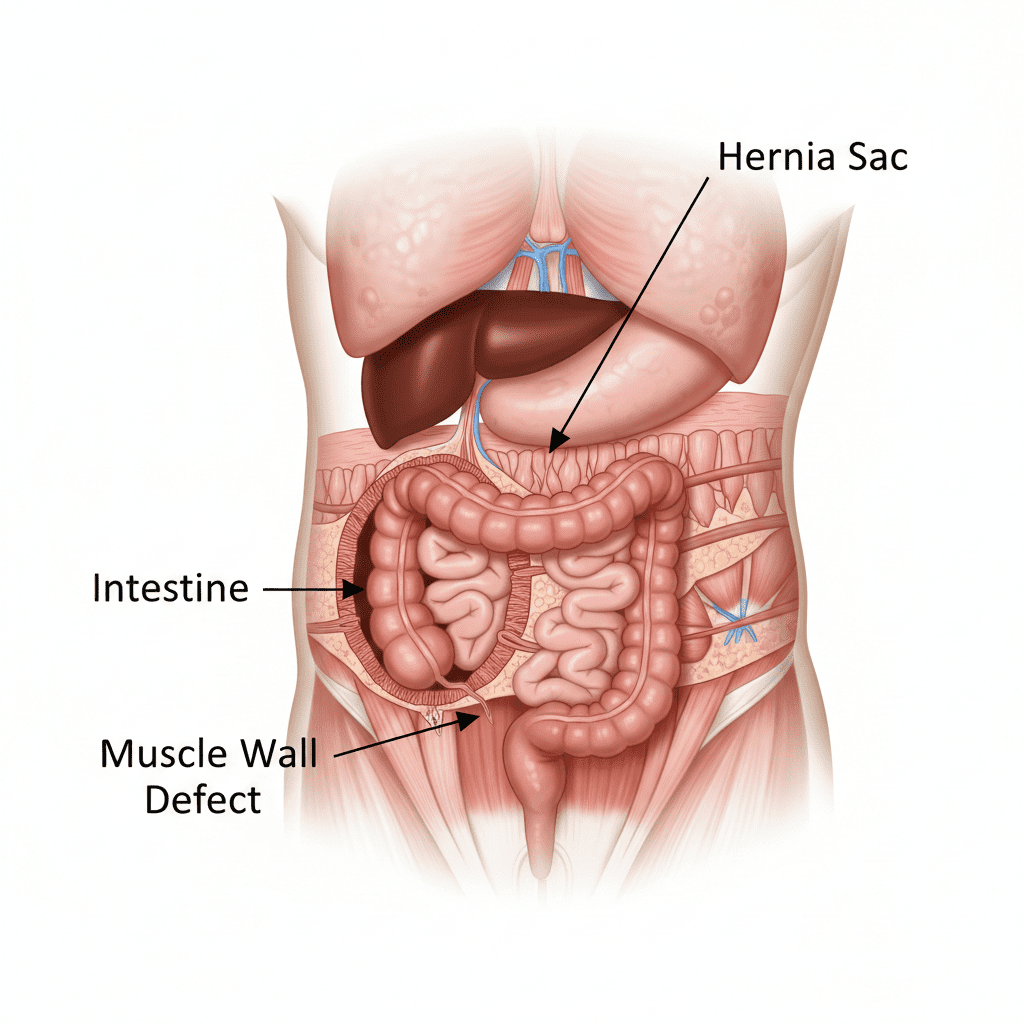
Alt text images of hernia how it occurs
What is a Hernia?
A hernia occurs when an internal organ or tissue pushes through a weak spot in the muscle or connective tissue that normally contains it. Think of it like a tire with a weak spot where the inner tube starts bulging out. This bulge is often visible and can be felt, especially when standing, coughing, or straining.
Hernias most commonly occur in the abdominal area, but they can develop in the upper thigh, belly button, or groin. While some hernias cause no symptoms initially, they don’t go away on their own and can lead to serious complications if ignored.
Why Do Hernias Occur? Causes and Risk Factors
Hernias result from a combination of muscle weakness and strain. The weak spot in the muscle wall can be present from birth or develop later in life. Here are the primary causes:
ICMR Guidelines on hernia learn more
Muscle Weakness From:
· Congenital defects (present at birth)
· Aging
· Surgical incisions that don’t heal properly
· Pregnancy
· Chronic coughing
· Obesity
Increased Pressure That Strains Weak Areas:
· Heavy lifting (especially with improper technique)
· Persistent coughing or sneezing
· Constipation and straining during bowel movements
· Ascites (fluid accumulation in abdomen)
· Sudden weight gain
· Physical exertion or sports
Common Symptoms: How to Recognize a Hernia
The signs of a hernia vary depending on its type and severity:
Visible Signs:
· A noticeable bulge or lump in the affected area
· Bulge that becomes more prominent when standing or straining
· Bulge that may disappear when lying down
Physical Sensations:
· Pain or discomfort at the bulge site, especially when bending, coughing, or lifting
· Aching or burning sensation
· Feeling of heaviness or pressure in the abdomen
· Weakness or pressure in the groin
Severe Symptoms (Require Immediate Attention):
· Sudden, severe pain
· Nausea and vomiting
· Bulge turns red, purple, or dark
· Inability to pass gas or have bowel movements
· Fever
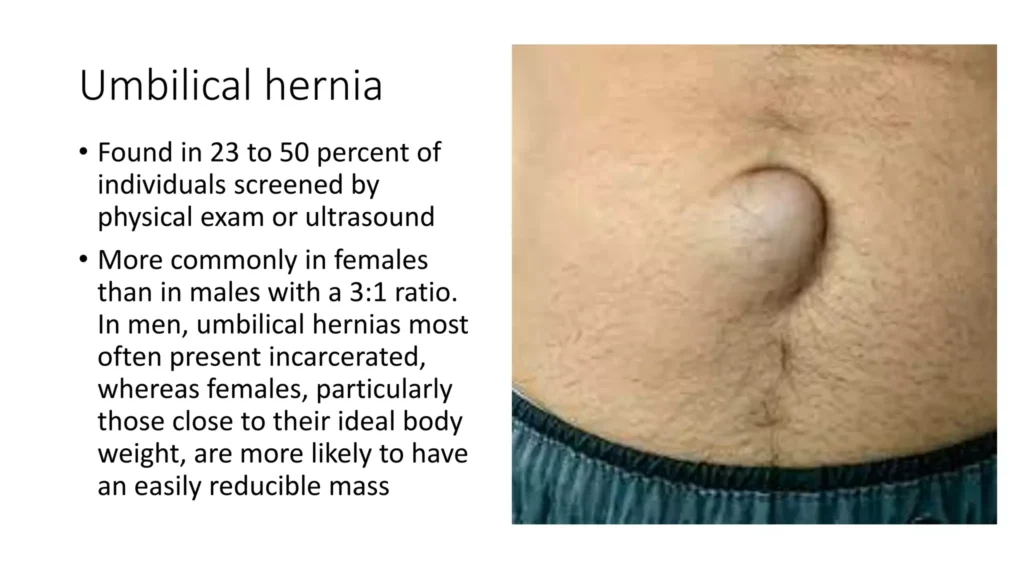
ALT TEXT ABMLICAL HERNIA
The Dangerous Reality: What Happens If Left Untreated?
While some small hernias may cause minimal symptoms initially, ignoring a hernia can lead to life-threatening complications:
1. Incarceration:
The herniated tissue becomes trapped and cannot be pushed back in.This causes constant pain, nausea, and creates a medical emergency.
2. Strangulation (The Most Dangerous Complication):
This occurs when blood supply to the trapped tissue is cut off.Without blood flow, the tissue begins to die (become necrotic). Strangulation can lead to:
· Sepsis: Dead tissue releases toxins that can cause system-wide infection
· Gangrene: Tissue death that can spread
· Organ Damage: The affected organ (often intestine) may require removal
· Death: Without emergency surgery, strangulation is fatal
3. Bowel Obstruction:
When part of the intestine becomes trapped in the hernia,it can block digestive flow, causing:
· Severe abdominal pain
· Inability to pass stool or gas
· Vomiting
· Abdominal swelling
4. Pressure on Surrounding Organs:
Large hernias can press against other organs,affecting their function and causing additional complications.
Who Gets Hernias? Age and Gender Statistics
Age Factor:
· Hernias can occur at any age, from newborns to elderly adults
· Infants and children often have congenital hernias
· Adults 40+ are at higher risk due to natural muscle weakening
· Risk increases significantly after age 60
Gender Differences:
· Men are 8-10 times more likely to develop inguinal hernias (groin area)
· Women have higher rates of femoral hernias (upper thigh) and umbilical hernias
· Pregnant women are at increased risk due to abdominal pressure
High-Risk Groups:
· People with chronic cough (smokers, COPD patients)
· Those with chronic constipation
· Individuals with obesity
· People with family history of hernias
· Manual laborers and athletes
· Previous abdominal surgery patients
Treatment Options: From Watchful Waiting to Surgery
Non-Surgical Approaches:
· Watchful waiting for small, asymptomatic hernias
· Lifestyle modifications (weight loss, avoiding heavy lifting)
· Support garments (trusses) for temporary relief
Surgical Solutions:
· Open surgery: Traditional repair with sutures
· Laparoscopic surgery: Minimally invasive with faster recovery
· Robotic surgery: Enhanced precision for complex cases
· Mesh reinforcement: Synthetic material strengthens repair
Recovery typically takes 2-6 weeks depending on the procedure and individual factors.
Prevention: Can Hernias Be Avoided?
While not all hernias are preventable, you can reduce your risk:
Lifestyle Strategies:
· Maintain healthy weight
· Eat high-fiber diet to prevent constipation
· Lift heavy objects properly (use legs, not back)
· Treat persistent coughs promptly
· Strengthen core muscles with appropriate exercises
· Avoid smoking
For Those at High Risk:
· Regular medical check-ups
· Early intervention for small hernias
· Special consideration during pregnancy
When to See a Doctor: Don’t Delay!
Seek immediate medical attention if you experience:
· Sudden, severe pain at hernia site
· Bulge that won’t push back in
· Nausea/vomiting with hernia pain
· Bulge that changes color
· Fever with hernia symptoms
For less urgent cases, schedule an appointment if you notice a new bulge or persistent discomfort.
Meta Description: Learn what causes hernias, symptoms to watch for, dangerous complications if untreated, and who’s most at risk. Complete guide to prevention and treatment options.
Keywords: hernia symptoms, hernia causes, hernia treatment, inguinal hernia, umbilical hernia, hernia surgery, hernia complications, strangulated hernia, hernia pain, prevent hernia
Tags: Hernia Health, Abdominal Health, Surgical Conditions, Men’s Health, Women’s Health, Senior Health, Medical Emergency, Prevention Tips
Citation Note: Information compiled from Mayo Clinic, Cleveland Clinic, and National Institutes of Health guidelines on hernia diagnosis and treatment.
Disclaimer: This article is for informational purposes only and does not constitute medical advice. Hernias are medical conditions requiring professional diagnosis and treatment. Always consult with a qualified healthcare provider for proper evaluation and management of any health concerns. Individual cases vary, and only a medical professional can determine the appropriate treatment for your specific situation. Never ignore hernia symptoms or delay seeking medical attention.