
The Silent Architects of Our World: A Journey Through Algorithms
Introduction: The Invisible Recipe for Everything
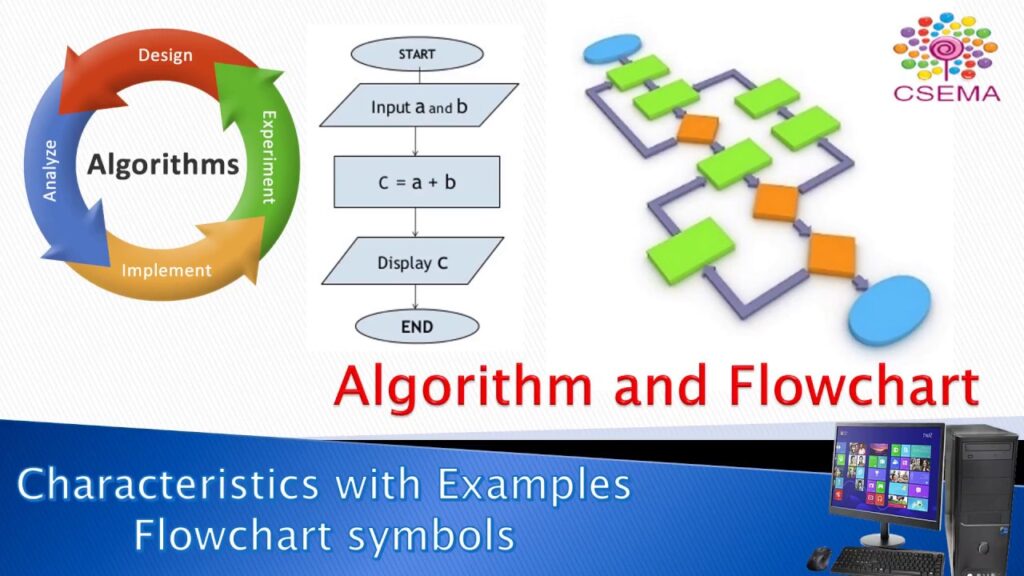
Imagine a recipe that can solve mathematical problems, guide spacecraft, recommend your next favorite song, and even diagnose diseases. This isn’t science fiction—it’s the reality of algorithms, the silent, step-by-step instructions that underpin our digital world. From the moment you wake up to a smartphone alarm (set by an algorithm) to scrolling through a personalized news feed at night, you are in a constant, intimate dance with these invisible procedures. This is the story of their ancient origins, revolutionary present, and how they quietly orchestrate our daily lives.
The Brain Behind AI: How Algorithms Power Machine Learning
From Clay Tablets to Code: A Brief History of the Algorithm
The word might sound modern, but the concept of algorithms is as old as civilization itself. Their story begins not in Silicon Valley, but in ancient Mesopotamia.
· The Babylonian Beginnings (c. 1800 BCE): The earliest known algorithms were inscribed on clay tablets, detailing systematic procedures for mathematical calculations like division. This was humanity’s first attempt to codify problem-solving logic.
· The Greek Foundation: Fast forward to Euclid of Alexandria (c. 300 BCE), who gave us the enduring Euclidean Algorithm for finding the greatest common divisor of two numbers—a testament to an algorithm’s timeless utility.
· The Father of the Name: Al-Khwarizmi: The term “algorithm” itself is a linguistic gift from the 9th-century Persian mathematician Muhammad ibn Musa al-Khwarizmi. His seminal book on algebra (Hisab al-Jabr w’al-Muqabala) introduced systematic methods for solving equations. When his work was translated into Latin, his name was rendered as “Algoritmi,” forever branding the concept.
· The First Computer Programmer: In the 1840s, Ada Lovelace, while working on Charles Babbage’s theoretical Analytical Engine, wrote the first algorithm designed to be carried out by a machine. She saw beyond mere calculation to the potential for computers to create music and art, earning her the title of the world’s first programmer.
· The Modern Foundation: Alan Turing: The theoretical bedrock for modern computer science was laid by Alan Turing in 1936. His conceptual Turing Machine provided a formal definition of what an algorithm is and what can be computed, paving the way for the digital revolution.
Internal link heep learning similar articles
The Brain Behind AI: How Algorithms Power Machine Learning
Today, the most dynamic frontier for algorithms is Machine Learning (ML). Here, algorithms are not just explicitly programmed for a task; they are designed to learn from data.
Think of ML algorithms as eager students. You give them examples (data), and they derive the rules themselves. This happens in several key paradigms:
1. Supervised Learning: Learning with a Teacher
Here, algorithms learn from labeled data (like emails tagged “spam” or “not spam”). Examples include:
· Linear Regression: Predicts continuous outcomes, like house prices.
· Decision Trees & Random Forests: Makes classification decisions (e.g., “Is this transaction fraudulent?”) by following a tree-like model of choices.
· Neural Networks: The powerhouse behind deep learning, mimicking the human brain to excel at tasks like image recognition (your phone unlocking with your face) and natural language processing (chatbots and translators).
2. Unsupervised Learning: Finding Hidden Patterns
This is for exploring unlabeled data to discover intrinsic structures.
· K-Means Clustering: Groups similar data points together, used for customer segmentation or organizing large document sets.
· Principal Component Analysis (PCA): Simplifies complex data by reducing its dimensions while preserving its essence.
3. Reinforcement Learning: Learning by Trial and Error
The algorithm learns to make sequences of decisions by receiving rewards or penalties. It’s how AlphaGo mastered the complex game of Go and how robotics systems learn to walk.
In essence, ML algorithms automate the discovery of statistical patterns, turning raw data into insight, prediction, and action.
The Algorithmic Tapestry of Daily Life
You interact with hundreds of algorithms every day, often without a second thought:
· The Search & Discovery Layer: When you Google a question, the PageRank algorithm sifts through billions of web pages to find the most relevant. Your Netflix homepage and Spotify Discover Weekly are curated by sophisticated recommendation algorithms that analyze your past behavior to predict what you’ll love next.
· The Logistics & Movement Layer: Asking Google Maps for the fastest route home invokes pathfinding algorithms like Dijkstra’s or A*. Ride-sharing apps use algorithms to match drivers with riders, set dynamic prices, and optimize fleet movement in real-time.
· The Communication & Commerce Layer: Your email’s spam filter is an ML classifier guarding your inbox. Online shopping is driven by algorithms that handle everything from search results (“customers also bought…”) to fraud detection on your credit card transaction.
· The Personal Assistant Layer: Asking Siri or Alexa a question triggers a cascade of algorithms for speech recognition, natural language understanding, information retrieval, and text-to-speech response.
Conclusion: Embracing the Algorithmic Age
From the dusty clay tablets of Babylon to the neural networks that generate art and converse with us, algorithms represent humanity’s enduring quest to formalize thought, automate labor, and extend our cognitive reach. They are not just lines of code; they are the very logic of our modern existence. As they grow more complex and autonomous, understanding their history and function is no longer just technical knowledge—it’s essential digital citizenship. By appreciating these silent architects, we can better navigate, utilize, and thoughtfully shape the world they are building around us.
Category: Technology & AI
Tags: Algorithms, Machine Learning, Artificial Intelligence, Computer Science History, Data Science, Technology in Daily Life, Programming, Deep Learning