
Are Employees of Indian Nationalised Banks Government Employees? A Clear Explanation
Category: Banking & Public Policy
Tags: Banking in India, Nationalised Banks, PSU Banks, Government Jobs, Bank Employees, Indian Banking System

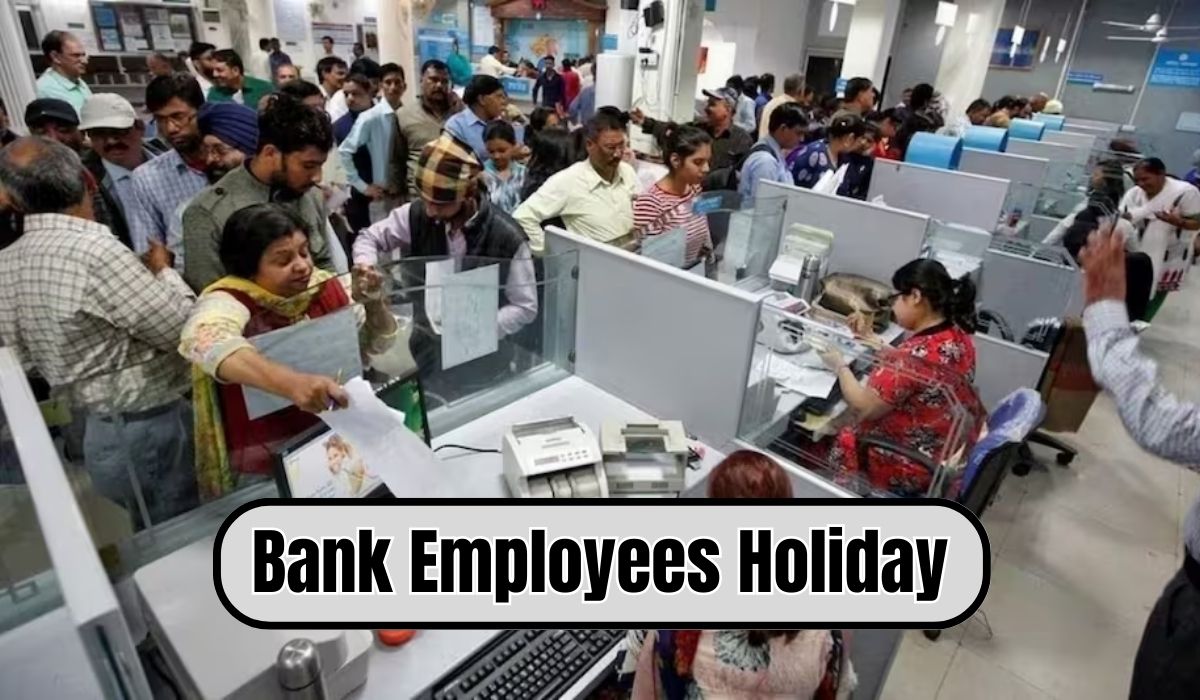
govrnment employees offices illustration
Introduction
In India, many people believe that employees working in nationalised banks are government employees. This misunderstanding is very common because these banks are owned by the Government of India. However, the legal and administrative position is different.
Employees of nationalised banks are not considered government employees, even though the government holds the majority ownership in these banks. They are employees of Public Sector Undertakings (PSUs) operating in the banking sector.
This article explains the difference in simple terms for public awareness.
keep rading for similar articles
What Are Nationalised Banks?
Nationalised banks are commercial banks where the majority of shares are owned by the government. The objective behind nationalisation was to bring banking services to rural areas, support agriculture, and ensure financial inclusion.
India witnessed two major bank nationalisation events:
- 1969: 14 major banks were nationalised.
- 1980: 6 more banks were nationalised.
These banks are now classified as Public Sector Banks (PSBs).
Some major examples include:
- State Bank of India
- Punjab National Bank
- Bank of Baroda
- Canara Bank
- Union Bank of India
Although these banks are government-owned, they function as independent corporate institutions.
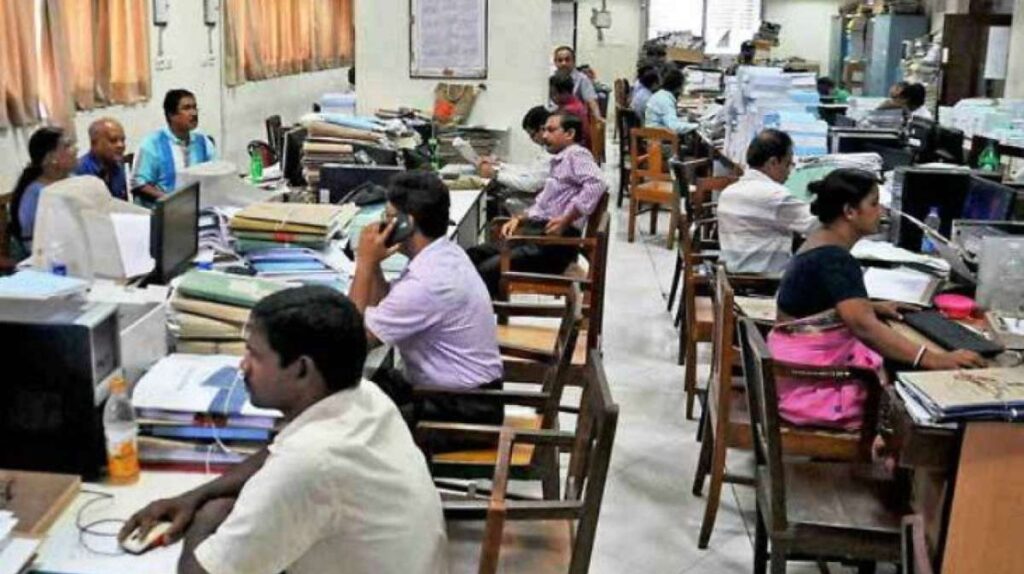
govrnment offices relaxed environments illustrations
Legal Status of Nationalised Banks
Nationalised banks were created under specific legislation such as the Banking Companies (Acquisition and Transfer of Undertakings) Act, 1970 and later amendments.
These laws made banks separate legal entities, meaning they operate independently from government departments. They have their own boards of directors, management systems, and operational structures.
Therefore, bank employees are not civil servants of the Government of India.
Recruitment Process Is Different
Another key difference is the recruitment process.
Government employees are usually recruited through the Union Public Service Commission or through state public service commissions.
However, most public sector bank employees are recruited through the Institute of Banking Personnel Selection (IBPS), which conducts competitive examinations for positions such as:
- Probationary Officers (PO)
- Clerks
- Specialist Officers
Similarly, recruitment in State Bank of India is conducted through its own examination system.
Because recruitment does not occur through the government civil service process, bank employees are classified differently.
Different Service Rules
Government employees follow the Central Civil Services (CCS) Rules, which regulate service conditions, discipline, promotions, and retirement.
Bank employees, on the other hand, follow bank service regulations framed by their respective banks. These rules are governed by banking laws and internal service policies rather than government civil service rules.
Salary and Pay Structure
Government employees receive salaries based on recommendations of the Central Pay Commission, such as the 7th Pay Commission.
In contrast, salaries of public sector bank employees are determined through bipartite settlements between:
- Bank employee unions
- Bank management
- The Indian Banks’ Association
These settlements determine salary revisions, allowances, and working conditions for bank staff.
Pension and Retirement Benefits
Government employees historically received pensions directly under government pension rules.
Bank employees follow a separate pension scheme managed by banks. Many newly recruited bank employees are also covered under the National Pension System (NPS).
Thus, their retirement benefits are structured differently from central government employees.
Constitutional Position
Under Indian law, government employees are protected by Article 311 of the Constitution, which provides safeguards against arbitrary dismissal.
Bank employees do not fall under this constitutional protection because they are not civil servants. However, they may still be treated as public servants under certain laws, such as anti-corruption legislation.
This distinction is important from a legal standpoint.
Why the Confusion Exists
The confusion arises because:
- The Government of India holds majority ownership in public sector banks.
- Banks play an important role in implementing government schemes.
- The public often assumes that government ownership automatically means government employment.
However, legally and administratively, ownership and employment status are different concepts.
Conclusion
Nationalised banks in India are owned by the government but operate as independent corporate institutions. Their employees are therefore not government employees but employees of public sector banks, which function as Public Sector Undertakings.
Understanding this distinction helps clarify the structure of India’s banking system and the legal status of those working within it.
References
- Banking Companies (Acquisition and Transfer of Undertakings) Act, 1970
- Ministry of Finance, Government of India – Public Sector Banks Overview
- Institute of Banking Personnel Selection (IBPS) Recruitment System
- Reserve Bank of India – Indian Banking Structure