The Biggest Problem in Education Today: Adapting to a Rapidly Changing Worl
Meta Description
The biggest problem in education today is adapting to artificial intelligence, mental health challenges, teacher shortages, and career readiness. This blog explores key education issues in 2027 and offers practical guidelines for teachers and professionals.
SEO Keywords
biggest problem in education today, education challenges 2027, artificial intelligence in education, competency-based education India, teacher shortage crisis, student mental health, career readiness skills, future of engineering colleges in India, education system reform, AI and learning
Ministry of education guidelines & future of education read more
Introduction
Education today is standing at a historic crossroads. While access to education has increased globally, the quality, relevance, and sustainability of education systems are under serious threat. The biggest problem in education today is the inability of traditional systems to adapt to rapid technological, social, and economic changes.
By 2027, experts predict that nearly 70% of traditional engineering colleges in India may shut down or merge due to declining enrolment, outdated curricula, and lack of employability. Artificial Intelligence (AI) is not only changing how students learn, but also questioning what should be taught and why.
Let us examine the key challenges shaping education today and the way forward.
1. Artificial Intelligence: A Double-Edged Sword
AI is the most disruptive force in modern education. While it offers personalized learning, automation of assessments, and global access to knowledge, it also exposes a major weakness—rote-based education has become obsolete.
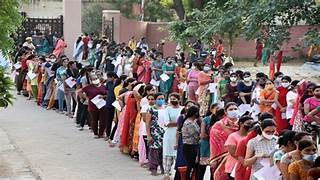
Alt Text: image shows why these candidates are standing in queu : only degree in hand no skills, totally unemploable.very very pathetic condition. The future is very bleak
Key Problems:
- Students depend on AI tools instead of critical thinking
- Teachers fear replacement instead of transformation
- Curriculum lags behind real-world AI applications
Solution:
AI should be treated as a learning partner, not a shortcut. Education must focus on:
- Problem-solving
- Ethical AI usage
- Creativity and decision-making
Teachers must learn how to teach with AI, not against it.
2. Competency-Based Education: Still a Distant Goal
India’s education system still rewards marks over mastery. Degrees are valued more than actual skills, which is why many graduates remain unemployable.
Issues:
- Students pass exams but lack practical competence
- Engineering and professional colleges teach outdated syllabi
- Industry-academia gap keeps widening
Solution:
Competency-Based Education (CBE) must replace time-based learning. Students should graduate only after demonstrating:
- Skill proficiency
- Project-based learning outcomes
- Real-world application ability
Degrees must reflect what a student can do, not how long they studied.
3. Teacher Shortages and Teacher Burnout
Teachers are the backbone of education, yet today they face:
- Low pay
- Heavy workload
- Lack of training in digital tools
- Emotional exhaustion
Many talented individuals avoid teaching, leading to a quality crisis, not just a numerical shortage.
Solution:
- Continuous professional development in AI and digital pedagogy
- Better respect, pay, and autonomy
- Reduced administrative burden
A future-ready education system cannot exist without empowered teachers.
4. Mental Health: The Silent Education Emergency
Student mental health has emerged as one of the most neglected issues in education. Academic pressure, competition, social media comparison, and career uncertainty are overwhelming young minds.
Alarming Trends:
- Rising anxiety and depression
- Fear of failure
- Loss of purpose and motivation
Solution:
Schools and colleges must integrate:
- Mental health education
- Counseling services
- Emotional intelligence training
Education should nurture human beings, not machines.
5. Student Engagement: The Classroom Is Losing Attention
Traditional lecture-based teaching fails to hold students’ interest in the age of short-form digital content.
Causes:
- One-way teaching methods
- Lack of interaction
- Irrelevant content
Solution:
- Interactive learning
- Case studies, simulations, and debates
- Project-based and experiential learning
Engaged students learn better, retain longer, and perform confidently.
6. Career Readiness: Degrees Without Direction
Perhaps the most dangerous problem today is that education no longer guarantees employment. Many graduates, especially engineers, lack job-ready skills.
Why Engineering Colleges Are Closing:
- Over-supply of institutions
- Poor placement records
- No alignment with industry needs
- Rapid AI-driven job evolution
Solution:
Education must shift from “job-seeking” to problem-solving and entrepreneurship. Focus areas include:
- Communication skills
- Digital literacy
- Adaptability and lifelong learning
Careers of the future will favor skills, not certificates.
Guidelines for Teachers and Education Professionals
1. Become Lifelong Learners
Upgrade yourself continuously in AI tools, data literacy, and new teaching methodologies.
2. Teach Thinking, Not Memorization
Encourage questioning, analysis, and creativity.
3. Integrate Technology Meaningfully
Use AI for personalization, assessment, and mentoring—not shortcuts.
4. Focus on Student Well-being
Create a safe, supportive learning environment.
5. Align Education With Reality
Teach skills that industry, society, and future challenges demand.
Conclusion
The biggest problem in education today is resistance to change. Artificial Intelligence, mental health challenges, teacher shortages, and employability gaps are not separate issues—they are interconnected symptoms of an outdated system.
As we move toward 2027, survival in education will depend on adaptability, relevance, and human values. Institutions that fail to evolve will vanish, but educators who transform will lead the future.
Education must no longer prepare students for exams—it must prepare them for life in an AI-driven world.
Disclaimer
This article is for educational and informational purposes only. Projections are based on current trends and expert observations.