
The Human Ear Explained: Anatomy, Hearing Functions, Ear Infections & ENT Tests
Meta Description (155 characters):
Learn the complex anatomy of the human ear, its hearing functions, decibel tolerance, ear infections, and ENT tests explained in simple language.
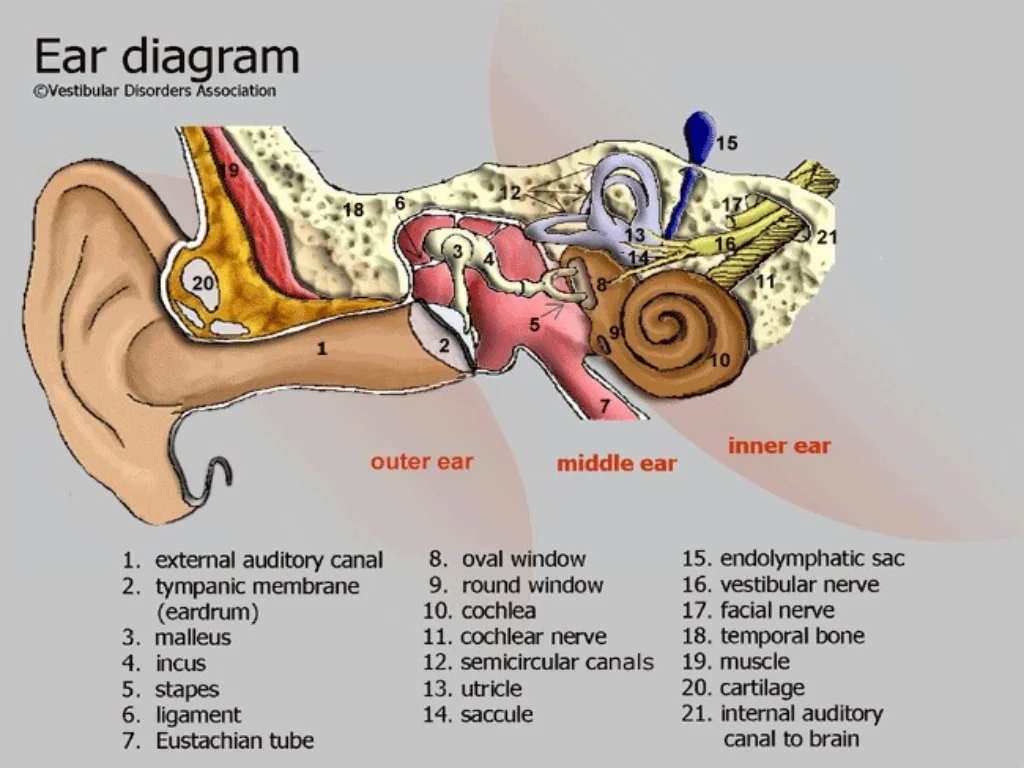
The complete ear diagram with all internal parts
Focus Keyword:
human ear anatomy
Secondary Keywords:
hearing mechanism, maximum decibel tolerance, ear infections, ENT tests, common cold hearing loss
Introduction Learn more from MOHFW guidelines on ENT research contents
The human ear is one of nature’s most complex anatomical structures. It not only allows us to hear but also helps us maintain balance. In this blog, we will explore how the ear works, the engineering marvels behind hearing, how much sound it can tolerate, what happens during a common cold, common ear problems, and the tests ENT specialists use to diagnose them.
Anatomy of the Human Ear
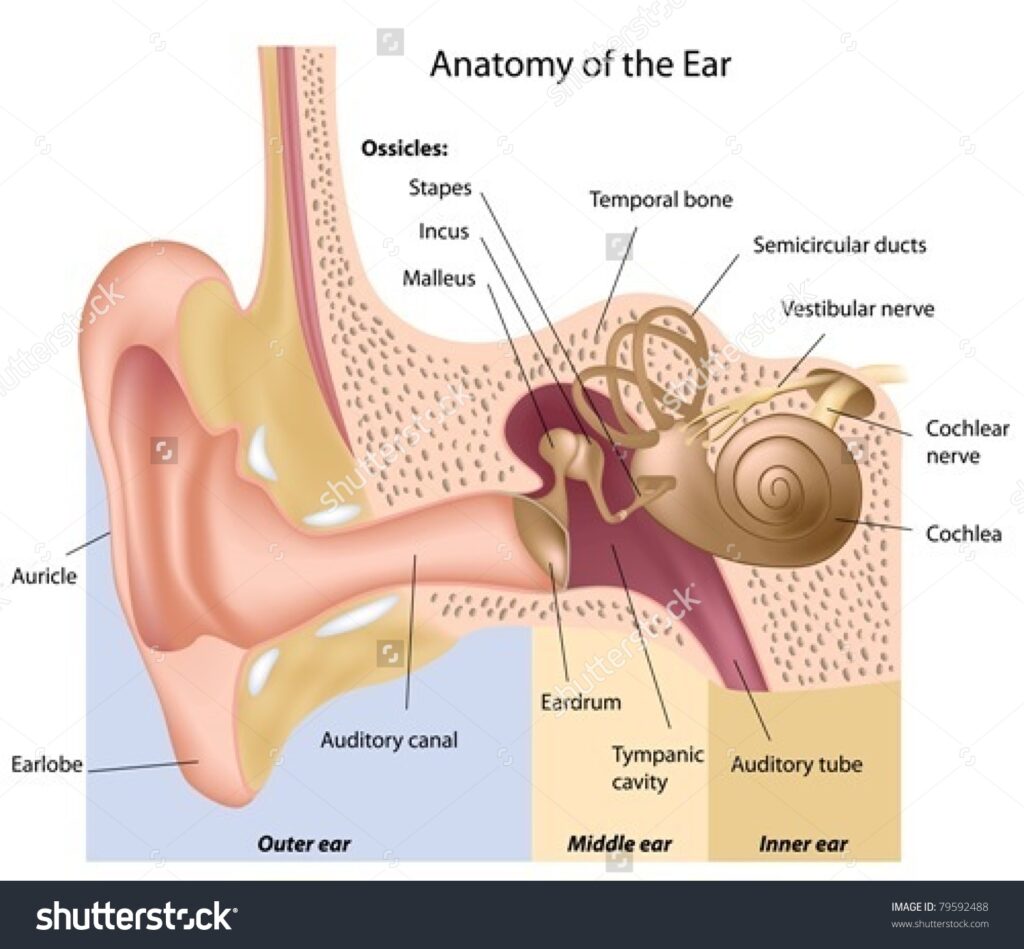
The Ear anotomy
The ear is divided into three parts:
– External Ear: The pinna and ear canal collect sound waves.
– Middle Ear: Tiny bones called ossicles (malleus, incus, stapes) amplify vibrations.
– Inner Ear: The cochlea converts vibrations into nerve signals, while semicircular canals help with balance.
This design makes the ear a biological engineering masterpiece.
Three Engineering Functions of Hearing
The ear performs three engineering-like functions: standard Treatments explained MOHFW
1. Acoustic Function (Sound Collection): The pinna acts like a funnel.
2. Mechanical Function (Sound Transmission): Ossicles amplify vibrations up to 20 times.
3. Electrical Function (Sound Conversion): The cochlea turns vibrations into electrical signals for the brain.
Maximum Decibel Tolerance
– Whisper: 30 dB
– Conversation: 60 dB
– Traffic: 85 dB
– Rock concert: 110 dB
– Pain threshold: 120–130 dB
Exposure above 85 dB for long periods can cause permanent hearing loss.
Hearing During a Common Cold
When you have a cold, the Eustachian tube gets blocked. This leads to:
– Fluid buildup in the middle ear
– Reduced vibration of ossicles
– Muffled or “underwater” hearing
This is called temporary conductive hearing loss.
Common Ear Affections
Some common ear problems include:
– Otitis Media: Middle ear infection learn more from ICMR guidelines on human ear affections
– Otitis Externa: Outer ear infection (swimmer’s ear)
– Tinnitus: Ringing in the ears
– Presbycusis: Age-related hearing loss
– Meniere’s Disease: Inner ear disorder causing vertigo
– Noise-Induced Hearing Loss: From loud sound exposure
ENT Diagnostic Tests
ENT specialists use several tests to check ear health:
– Otoscopy: Examining the ear canal and eardrum
– Audiometry: Measuring hearing ability
– Tympanometry: Testing middle ear function
– Pure Tone Test: Finding the softest sound you can hear
– Speech Audiometry: Checking clarity of speech hearing
– CT/MRI Scans: For complex inner ear problems
Disclaimer
This blog is for educational purposes only. It explains ear anatomy and hearing in layman’s language. It is not a substitute for medical advice. If you experience ear pain, hearing loss, or persistent infections, consult a qualified ENT specialist.
Conclusion
The human ear is a marvel of natural engineering. It combines acoustic, mechanical, and electrical functions to give us the gift of hearing. While it can tolerate up to 120–130 dB, loud sounds, infections, or even a common cold can affect its delicate balance. ENT specialists use advanced tests to diagnose and treat ear problems, ensuring this complex organ continues to serve us well.
Sources:
– Britannica – Physiology of Hearing
– TeachMeAnatomy – Ear Anatomy
– ENT Lecture – Physiology of Hearing