Meta-description
Many graduates in Madhya Pradesh aim only for government jobs or entrance exams — but low interest in skill-development and weak communication skills limit their potential. This post analyses root causes and suggests how to shift the trend toward vocational skills, employability, and real opportunities.
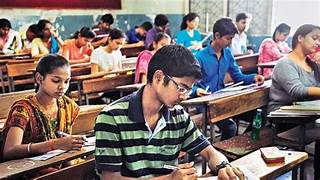
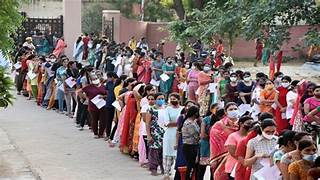
Alt Text: students appearing for competitive exam with only theorical knowledge but zero skill development.really great concern in MP
SEO Keywords:
Madhya Pradesh graduates, skill development India, vocational training, youth employability MP, higher education crisis, communication skills, government jobs aspiration, employability gap, Make in India, skill gap MP
Why So Many Graduates in MP Aim Only for Government Exams or Entrance Tests
Over the past decades, higher education in India — including Madhya Pradesh — has seen a boom in number of degree colleges and students enrolling in generic undergraduate courses (Arts, Science, Commerce). As you noted, MP reportedly has over 3,100 degree-colleges, though there is no reliable public district-wise listing available. This suggests a large volume of undergraduates emerging every year — many coming out with a B.A., B.Sc., or B.Com. Most of them share a common ambition: to crack competitive exams (for government jobs, or for professional entrance tests like NEET, JEE).
This phenomenon arises from multiple factors:
- Perceived social prestige and stability of government jobs, which are viewed as secure and “ respectable.” For many families — especially in semi-urban/rural contexts — a government job is the safest route to upward mobility, better income, and social status.
- Limited awareness or exposure to alternative career paths. Many students and parents are simply not aware of the value and potential of vocational training, skills development, or non-traditional careers — so they stick to what seems known and “safe.”
- Higher-education system biases toward theory over practice. As some recent critiques point out, India’s college education often emphasises theoretical knowledge rather than practical or industry-relevant skills. Degrees thus become certificates rather than job-ready credentials.
- Weak soft skills and communication abilities. As you observed, many graduates have poor command over English — and sometimes even Hindi — which limits their employability outside narrow exam-preparation circles. Employers today often demand communication, teamwork, adaptability and technical skills — which most traditional graduates do not acquire.
As a result, many graduates end up attempting multiple competitive exams, often failing, and remain under-employed or unemployed — even though they hold degrees.
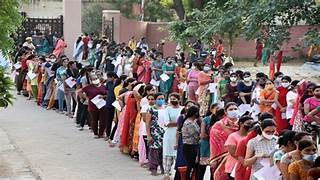
Alt Text candidates stand in a long queue for interview seeking Govt jobs in mp without nil skill development only paper degrees.It is not personal but the weak foundation of education system.No proper infrastructure for skill development.Great concern
The Cost of “Degree-Only” Mindset and Neglect of Skills
This trend has wider implications — for individuals, for local economies, and for society as a whole. Some of the risks and costs include:
- Wasted human capital. Young people invest time and money in degree courses but emerge without usable, market-relevant skills. Their potential remains unutilized.
- Rising youth unemployment or underemployment. Even as the number of graduates increases, the job market does not have adequate demand for unskilled or theory-only graduates. According to recent studies, unemployment among educated youth remains a serious challenge in India.
- Skill gap in industries and local economy. Industries — especially service, manufacturing or emerging sectors — require a workforce with practical skills, vocational training, and soft skills. But the supply does not match demand, hampering productivity and economic growth.
- Perpetuation of social inequality and limited mobility. Youth from rural or marginalized backgrounds, lacking resources or exposure, are more likely to get stuck in cycles of unsuccessful job-exam attempts, with diminishing hope and prospects.
In short — a degree by itself, without practical skills or employable competence, is increasingly becoming a hollow credential rather than a passport to success.
Why Skill Development Has Not Caught On — Barriers and Systemic Challenges
Given the importance of vocational training and skill-based education, why hasn’t the trend shifted significantly, even after several government initiatives like Skill India Mission or national vocational frameworks? The barriers are structural, cultural and institutional:
- Cultural bias: Vocational training is often seen as “less respectable” than traditional degrees. Manual work or trades are undervalued compared to white-collar jobs or government posts. This social stigma discourages many from opting for skills-based paths.
- Poor quality and design of many training programs: Some vocational courses are short-term, theory-heavy, or lack linkages with real industry requirements. As a result, graduates from such programs remain unimployable or stuck in informal, low-paying jobs.
- Weak integration between education system and industry demand: There is often mismatch — what colleges or training centres teach is not aligned with what businesses need. The transition from education to employment (especially for technical/vocational education or VET) remains weak.
- Low awareness and lack of counselling or guidance: Many students do not know about the full range of career options, or how to enter technical/vocational training. There is limited career-guidance at college level.
- Failure to build soft skills and communication skills: Even if technical skills are imparted, many courses don’t emphasize communication, language, teamwork — crucial for many jobs in services, technology, etc.
- Economic and geographic disparities: In rural or semi-urban areas (common in Madhya Pradesh), access to good-quality vocational institutes may be limited, and migrating to cities is often not feasible or acceptable to local youth.
Thus, simply offering “skill courses” is not enough — they must be well-designed, contextual, and must reach the youth with the right messaging, support, and opportunity structures.
What Needs to Change: A Roadmap to Shift the Trend in Madhya Prade
If one wants to reverse the trend — from degree-only, exam-obsessed graduates to a more balanced workforce with skills, employability and realistic career options — then a multi-pronged approach is needed, involving policy, education institutions, communities, and youth themselves. Here are concrete suggestions:
1. Raise Awareness & Change Mindset
- Conduct widespread career-guidance and counselling programs in high-schools and colleges — to sensitize students (and parents) about the value of vocational training, skill-based jobs, trades, entrepreneurship, and non-traditional careers.
- Highlight success stories of skilled professionals (technicians, artisans, tradespeople, entrepreneurs) to reduce stigma and show dignity in skill-based livelihoods.
- Use local languages (Hindi, regional dialects) alongside English when promoting skill development — to reach rural/semi-urban youth who may feel intimidated by English-centric messaging.
2. Strengthen Vocational & Skill Training Infrastructure
- Improve the quality of vocational courses: ensure that courses are not just short-term or certificate-oriented, but include hands-on training, industry-relevant curriculum, soft skills, communication, IT literacy. This alignment is critical for employability.
- Promote public-private partnerships: link training institutes with industries, companies, and local employers — so that vocational graduates have direct pathways to jobs, apprenticeships, or entrepreneurship. This reduces the gap between education and employment.
- Expand access in rural and semi-urban areas: ensure there are accessible vocational centres or training institutes across districts, not only in big towns, to serve students outside metros.
3. Integrate Skill Development with Regular Education
- Embed vocational or skill-based modules alongside regular college degrees or even during higher-secondary schooling — not treat them as “alternate” or “lesser” pathways. This approach would normalize skills as part of mainstream education.
- Include soft skills, communication, languages (English/Hindi), computer literacy, critical thinking, basic job-readiness as part of the regular curriculum in degree colleges. This will improve overall employability and communication readiness.
4. Incentivize Industries and Employers to Hire Skilled Youth
- Provide incentives — tax breaks, subsidies, grants — to companies that hire vocationally trained youth from rural or semi-urban areas. This can help build a demand-driven environment for skills.
- Promote apprenticeship models or on-the-job training, so that youth can “learn while they earn,” and employers get trained manpower.
5. Policy & Government Role — State-Specific Interventions
- The state government (e.g., in Madhya Pradesh) should conduct a skill-gap survey district by district, identify regional demand for trades/skills, and accordingly set up training centres — so that skill offerings match local economic needs (agriculture-based, manufacturing, small industry, services). This idea echoes proposals by researchers for region-based skill mapping.
- Run awareness campaigns — especially in rural areas — promoting dignity of skilled jobs, entrepreneurship, trades, self-employment, rather than only degree-based dreams.
- Provide financial support or scholarships for youth to pursue longer-term vocational or technical courses, to overcome economic barriers.
6. Encourage Youth to Take Charge — Value of Practical & Soft Skills
- Youth should recognize that real-world job markets increasingly value practical skills + soft skills + adaptability, not just a degree. Those who invest in skill development are more likely to find sustainable work, sometimes even at higher pay.
- Adopt a mindset of learning, re-skilling, multi-skilling — especially in emerging sectors (services, small manufacturing, digital economy, trades) where demand is rising.
- Balance aspirations: yes, competitive exams may remain an option — but having skills gives a fallback. One does not have to “either-or”: degree + skills + communication + employability.
Conclusion: A Shift in Mindset — From “Certificate Hunting” to “Capability Building”
The trend you described — undergraduates in Madhya Pradesh chasing only competitive exams and ignoring skills — is not just a personal or local problem; it reflects structural weaknesses in the education-to-employment system. But it is not irreversible.
Reversing this trend requires a change in mindset (by youth, parents, society), better infrastructure and quality in skill education, linkages between education and industry, and policy support — all working together.
For Madhya Pradesh, which has thousands of degree colleges and annually churns out lakhs of graduates, this shift is not just desirable but essential. Unless students also acquire relevant skills and communication competence, many may end up unemployed or under-employed, wasting both personal potential and societal resources.
If implemented thoughtfully, skill-based education can convert the “degree explosion” into a demographic dividend — a workforce that is employable, productive, and aligned with modern economy’s needs.