

· Tropical Eosinophilia & Acromegaly: Causes, Symptoms, and Treatments
· Meta Description: Confused about Tropical Pulmonary Eosinophilia and Acromegaly? Learn their definitions, causes, symptoms, and treatments in Allopathy, Homeopathy, and Ayurveda. Get a clear comparison guide.
· Focus Keyphrase: Tropical Eosinophilia and Acromegaly
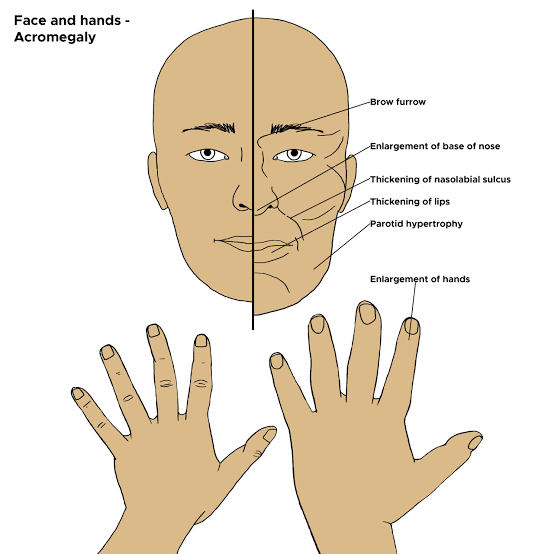
Alt Text :It is a disorder in adults characterized by the progressive enlargement of the hands,feet, jaw, and other parts of the body, caused by chronic overproduction of Growth Hormone.
ICMR –Dignosis and management External link
· Keywords: tropical pulmonary eosinophilia, acromegaly, filarial infection, growth hormone, eosinophilia treatment, diethylcarbamazine, ayurvedic medicine, homeopathic remedies, elephantiasis, IGF-1, pituitary tumor.
· Slug: tropical-eosinophilia-acromegaly-differences-treatment
Tropical Eosinophilia and Acromegaly: Two Very Different Conditions Explained
Understanding Tropical Eosinophilia and Acromegaly: A Complete Guide
When we hear complex medical names like “Tropical Eosinophilia” and “Acromegaly,” it’s easy to assume they might be related. However, they are two entirely distinct conditions affecting different parts of the body. This guide will break down both in simple English, covering their causes, symptoms, and the various treatment options available, including modern medicine, homeopathy, and Ayurveda.
Part 1: Tropical Pulmonary Eosinophilia (TPE)
Tropical Pulmonary Eosinophilia is a lung disease that occurs as a rare allergic reaction to a specific type of parasitic worm.
Definition of Tropical Eosinophilia Agromegaley-NIDDK External link
It is a syndrome characterized by a high number of eosinophils(a type of white blood cell) in the blood and lungs, caused by the body’s intense immune response to the microfilariae of Wuchereria bancrofti, a filarial parasite.
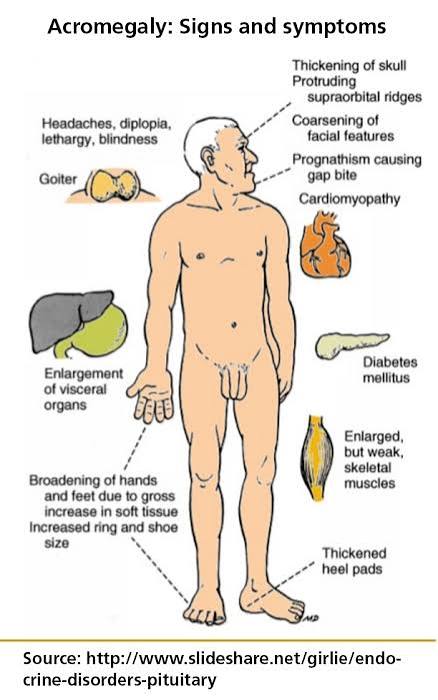
Alt Text Symptoms and affected body organs source as above
Aetiology (Cause)
The root cause is a mosquito bite.When an infected mosquito bites a person, it transmits the larval form of the Wuchereria bancrofti parasite. In most people, this leads to lymphatic filariasis (like elephantiasis). However, in Tropical Eosinophilia, the body has a unique, hyperactive allergic reaction to the tiny larval forms (microfilariae) that get trapped in the lungs.
Pathology and Clinical Features
The trapped microfilariae in the lung tissues trigger a massive allergic response.The body sends a huge number of eosinophils to attack the parasites, causing inflammation and damage to the lungs.
Symptoms:
· A persistent, dry, and hacking cough that worsens at night.
· Wheezing and asthma-like attacks.
· Shortness of breath.
· Chest pain or discomfort.
· Low-grade fever, fatigue, and weight loss.
Signs:
· Doctors may hear wheezing or crackling sounds in the lungs with a stethoscope.
· In long-standing, untreated cases, the lungs can become scarred (pulmonary fibrosis).
ESR Status and Investigations
· ESR (Erythrocyte Sedimentation Rate): The ESR is typically very high due to the intense inflammation in the body.
· Blood Test: Shows an extremely high eosinophil count.
· Chest X-ray: May show increased lung markings or mottled opacities.
· Serological Test: A filarial antibody test is usually strongly positive.
· Lung Function Test: Often shows a restrictive pattern, meaning the lungs can’t hold as much air as they should.
Treatment
Allopathic Medicine:
The first-line treatment is an antiparasitic drug calledDiethylcarbamazine (DEC). A course of 2-3 weeks usually provides rapid relief. In some cases, corticosteroids may be added to control severe inflammation.
Homeopathic Medicine:
Homeopathy considers the individual’s unique symptoms. Some commonly used remedies include:
· Arsenicum Album: For intense wheezing, restlessness, and a burning sensation in the chest.
· Ipecacuanha: For constant nausea with a violent cough and difficulty bringing up phlegm.
· Natrum Sulphuricum: For asthma-like symptoms that worsen in damp weather.
· Note: Homeopathy should be used as a supportive therapy under the guidance of a qualified homeopath, not as a replacement for antiparasitic drugs.
Ayurvedic Remedies: internal link for read more health awareness blog
Ayurveda views this condition as an imbalance of Kapha and Vata doshas,with toxins (Ama) affecting the lungs.
· Herbs: Vasa (Adhatoda vasica), Shirish (Albizia lebbeck), and Kantakari (Solanum xanthocarpum) are used for their anti-inflammatory and bronchodilatory properties.
· Formulations: Shwas Kasar Churna and Sitopaladi Churna are commonly prescribed to alleviate cough and breathlessness.
· Note: Ayurvedic treatment should be pursued under the supervision of an experienced Ayurvedic practitioner.
Part 2: Acromegaly
Acromegaly is a rare hormonal disorder that occurs when the pituitary gland produces too much Growth Hormone (GH) after the growth plates in the bones have closed.
Definition of Acromegaly
It is a disorder in adults characterized by the progressive enlargement of the hands,feet, jaw, and other parts of the body, caused by chronic overproduction of Growth Hormone.
Aetiology (Cause)
In over 95%of cases, Acromegaly is caused by a non-cancerous (benign) tumor on the pituitary gland, called a pituitary adenoma. This tumor secretes excessive amounts of Growth Hormone.
: Pathology and Clinical Features
Excess Growth Hormone leads to the overproduction of another hormone called Insulin-like Growth Factor-1(IGF-1) from the liver. IGF-1 is what causes the widespread enlargement of tissues and bones. The changes are very slow, often taking years to become noticeable.
Symptoms:
· Gradual enlargement of hands and feet (ring or shoe size increases).
· Coarsening of facial features (enlarged nose, thickened lips, prominent brow).
· Spacing out of teeth and protrusion of the lower jaw (prognathism).
· Joint pains.
· Deepened voice.
· Headaches and vision problems (if the tumor presses on optic nerves).
· Excessive sweating and oily skin.
Signs:
· A doctor can observe the characteristic physical changes.
· High blood pressure may be present.
· Signs of Carpal Tunnel Syndrome are common.
ESR Status and Investigations
· ESR (Erythrocyte Sedimentation Rate): The ESR is usually normal in Acromegaly, as it is not primarily an inflammatory condition.
· IGF-1 Blood Test: This is the most important screening test. Levels are consistently high.
· Oral Glucose Tolerance Test (OGTT): The definitive test. In a healthy person, glucose suppresses GH levels. In acromegaly, GH levels fail to suppress.
· MRI of the Brain: To locate and measure the pituitary tumor.Treatment
Allopathic Medicine:
The goal is to reduce GH production and remove the tumor.
1. Surgery: The first choice is transsphenoidal surgery to remove the pituitary adenoma.
2. Medications: If surgery isn’t fully successful, drugs like Somatostatin analogs (e.g., Octreotide), GH receptor antagonists (Pegvisomant), or Dopamine agonists are used.
3. Radiation Therapy: Used for leftover tumor tissue if surgery and medication aren’t effective.
Homeopathic Medicine:
Homeopathy aims to correct the hormonal imbalance. Remedies are chosen based on the individual’s totality of symptoms.
· Baryta Carbonica: For delayed mental and physical development, and enlarged features.
· Calcarea Carbonica: For excessive sweating, especially on the head, and fatigue.
· Thuja Occidentalis: For left-sided headaches and various growths.
· Important: Homeopathy is not a primary treatment for acromegaly. It may be used for supportive care, but surgical or medical intervention is essential.
Ayurvedic Remedies:
Ayurveda links Acromegaly to an imbalance in Vata dosha and the body’s formative tissues(Dhatus).
· Herbs: Ashwagandha (Withania somnifera), Guggulu (Commiphora mukul), and Shilajit are used for their rejuvenating and balancing properties.
· Therapies: Panchakarma detoxification procedures may be recommended to cleanse the body.
· Note: Ayurveda can be a supportive therapy to manage symptoms but cannot replace the need to address the pituitary tumor medically or surgically.
Conclusion
While both Tropical Eosinophilia and Acromegaly can cause significant physical changes, they originate from completely different sources. Tropical Eosinophilia is an allergic lung reaction to a parasite, while Acromegaly is a hormonal disorder caused by a pituitary tumor. Their diagnostic paths and primary treatments are worlds apart. If you suspect you or someone you know has symptoms of either condition, the most crucial step is to consult a qualified medical doctor for an accurate diagnosis and a safe, effective treatment plan.
C) CITATIONS & REFERENCES
1. TPE: Ong, R. K., & Doyle, R. L. (1998). Tropical pulmonary eosinophilia. Chest, 113(6), 1673-1679.
2. Acromegaly: Melmed, S. (2006). Acromegaly. New England Journal of Medicine, 355(24), 2558-2573.
3. Homeopathic Materia Medica: Boericke, W. (1927). Pocket Manual of Homeopathic Materia Medica & Repertory.
4. Ayurvedic Pharmacology: Sharma, P. V. (2006). Dravyaguna Vijnana (Vol. II). Chaukhambha Bharati Academy.
(D) DISCLAIMER NOTE
Important Medical Disclaimer: The information provided in this blog post is for educational and informational purposes only and is not intended as a substitute for professional medical advice, diagnosis, or treatment. Always seek the advice of your physician or another qualified health provider with any questions you may have regarding a medical condition. Never disregard professional medical advice or delay in seeking it because of something you have read in this article. The mentions of homeopathic and Ayurvedic remedies are for informational completeness and do not constitute an endorsement. These complementary therapies should be discussed with your primary healthcare provider to ensure they are safe and appropriate for your specific situation. Self-treatment can be dangerous.