
India at the Crossroads: Can the Nation’s Youth Save Democracy or Sink It?
Category: Society, Governance, Education, Democracy
Tags: India, Youth, Corruption, Fake Degrees, Political Crisis, Social Media, Education Reform, Democracy, Employment, National Security
https://dailydrdose.com Read more
A Wake-Up Call for Modern India
Recent reports from Madhya Pradesh have shocked the nation. Several individuals were allegedly found working in government hospitals using forged MBBS degrees, exposing serious gaps in credential verification and public accountability. Investigations suggest the problem may not be isolated. Cases of forged medical certificates and admission fraud have also surfaced in other states, raising concern about the integrity of parts of India’s educational and regulatory systems.
This is not merely a medical scandal.
It reflects a deeper crisis: when education becomes a business, governance becomes weak, and democracy becomes vulnerable.
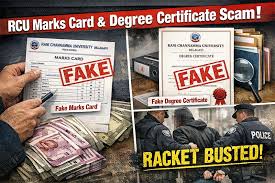
A Wake-Up Call for Modern India
When Degrees Become Products, Knowledge Dies
Education was once considered a sacred path to wisdom and nation-building.
Today, in many places, degrees have become market commodities.
Some institutions—often protected by political influence—prioritize profit over quality. Seats are sold, attendance is manipulated, examinations are compromised, and merit is weakened.
This creates three dangerous outcomes:
- Unqualified professionals enter critical sectors like healthcare, engineering, and management.
- Genuine students lose faith in hard work.
- Public trust collapses when institutions no longer guarantee competence.
A doctor without training can cost lives.
An engineer without skill can destroy infrastructure.
A manager without ethics can ruin organizations.
A nation cannot progress when certification replaces capability.
The Oversupply Trap: Too Many Degrees, Too Few Skills
India produces millions of graduates every year.
Yet employers often report a shortage of employable talent.
Why?
Because many graduates hold degrees but lack:
- Practical problem-solving ability
- Communication skills
- Ethical discipline
- Critical thinking
- Emotional resilience
This mismatch creates frustration.
A young person spends years studying, yet finds no meaningful work. Salaries remain low, competition rises, and disappointment grows.
Disillusioned youth often seek shortcuts:
- Social media fame
- Political patronage
- Manipulative networking
- Quick-money schemes
- Criminal pathways disguised as “success”
This is not always because they are bad people.
Often, it is because systems have failed to reward honesty and merit.
The Political Exploitation of Frustration
History shows that unemployed and angry youth are easy targets for political manipulation.
Across many countries—from unrest in parts of Sri Lanka to instability in Bangladesh and political shifts in Nepal—economic frustration has often fueled social unrest.
India is not immune.
Political groups sometimes exploit frustration through:
- Unrealistic promises of freebies
- Identity-based polarization
- Religious and caste-based division
- Manufactured outrage campaigns
- Mob mobilization through digital propaganda
Young minds seeking purpose can become tools in larger power struggles.
This weakens democracy from within.
The Dangerous Power of Social Media
Social media is one of humanity’s most powerful inventions.
It can educate, connect, and inspire.
But it can also divide.
False information spreads faster than truth.
Algorithms reward emotional reaction, not wisdom.
Hatred often gains more attention than reason.
Today, distorted religious interpretations, caste hatred, manipulated videos, and fake political narratives can provoke unrest within hours.
The result:
- Reduced tolerance
- Rising impatience
- Distrust among communities
- Emotional radicalization
- Weakening of social harmony
India’s strength has always been diversity.
If misinformation turns diversity into conflict, the nation risks internal instability.
Freedom Without Responsibility Leads to Collapse
Modern youth rightly seek freedom:
Freedom of thought.
Freedom of expression.
Freedom of opportunity.
These are democratic rights.
But freedom without discipline becomes chaos.
A society cannot survive if everyone rejects:
- Accountability
- Respect for institutions
- Ethical limits
- Social responsibility
Real liberty requires maturity.
Without it, democracy becomes noise instead of governance.
Can India Collapse?
India faces serious structural challenges:
- Educational corruption
- Skill unemployment
- Institutional distrust
- Social polarization
- Foreign digital influence
- Political opportunism
But collapse is not inevitable.
India has survived invasions, colonial rule, partition, wars, and internal conflict because its civilizational roots are deep.
Its resilience lies in:
- Constitutional democracy
- Cultural plurality
- Entrepreneurial youth
- Independent institutions
- Public awareness
The real question is not whether India will collapse.
It is:
Will Indians reform fast enough?
The Way Forward
India needs urgent reforms:
1. Clean Education
Strict digital verification of all degrees and transparent audits of institutions.
2. Skill-Based Learning
Less rote memorization, more practical competence.
3. Ethical Leadership
Politics must reward service, not manipulation.
4. Media Literacy
Youth must learn to verify information before believing or sharing it.
5. Employment Through Innovation
Encourage startups, local manufacturing, and entrepreneurship.
6. National Unity Beyond Identity
Caste and religion should never be political weapons.
The Final Truth
A nation does not collapse because enemies attack it.
A nation collapses when its people stop valuing truth, merit, discipline, and unity.
India’s future will not be decided in Parliament alone.
It will be decided in classrooms, homes, mobile screens, and the conscience of its youth.
The choice is simple:
Build character—or witness chaos.
India still has time.
But time demands action.